Student Spotlight: Dr. Ramesh Raj Sunar — A Journey Beyond Borders
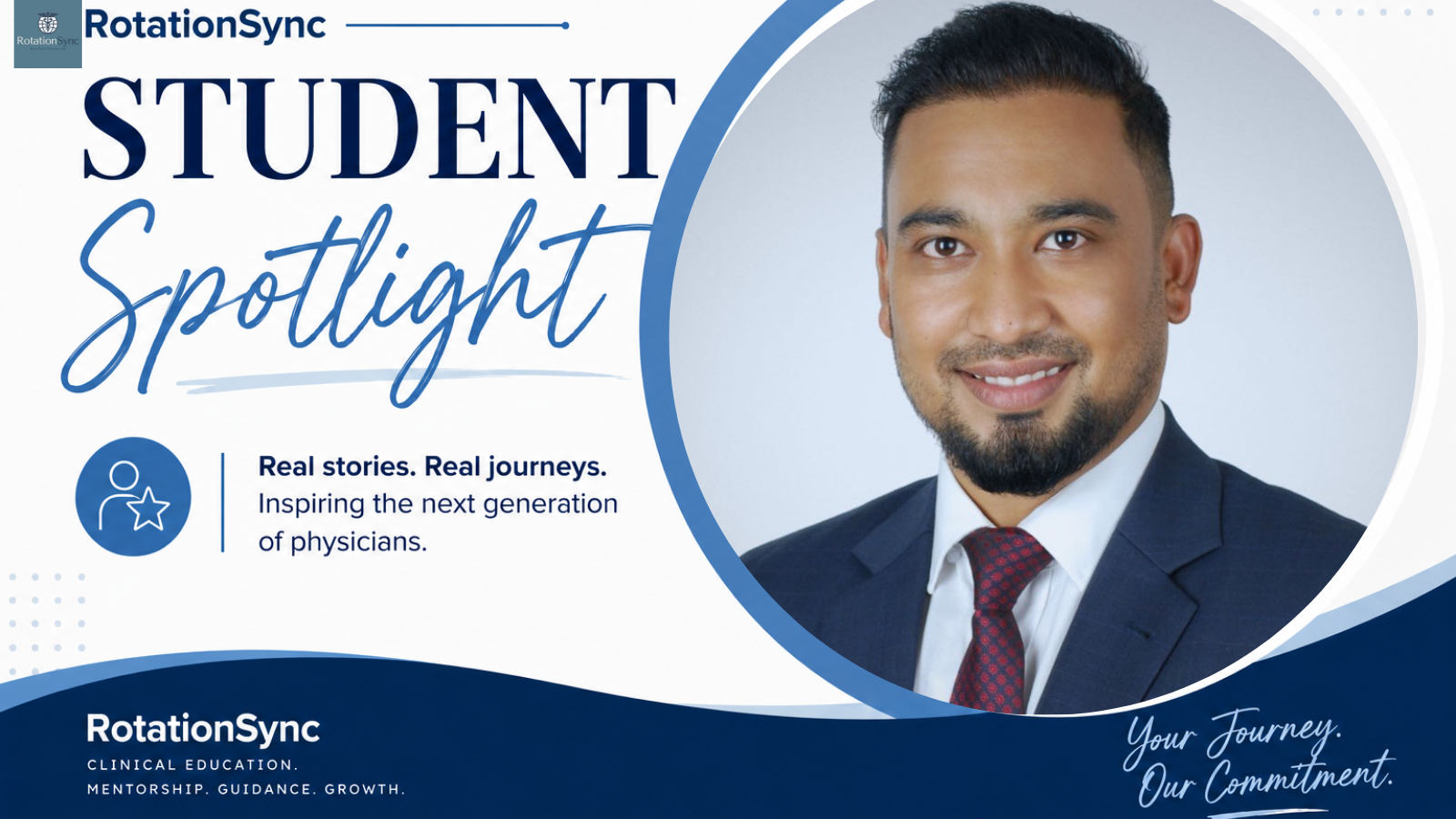
From a rural village in Nepal to practicing medicine across multiple countries, Dr. Ramesh Raj Sunar's journey is a testament to perseverance, purpose, and the belief that where you begin does not have to determine how far you can go.
For Dr. Ramesh Raj Sunar, the decision to pursue medicine was deeply personal.
Growing up in a rural village in Nepal, access to healthcare was limited. His community relied largely on paramedical staff working with scarce resources, and seeking medical attention often meant overcoming significant geographic and financial barriers.
Even education required determination. Each day, Ramesh walked thirty minutes uphill to attend a school without basic facilities. His father, who served in the army, worked hard to provide for his four children and encouraged them to pursue their education.
Those early experiences helped shape Ramesh's understanding of what opportunity could mean—not only for himself, but for the people and communities around him.
“Seeing that shortage of medical care, alongside a lack of health awareness, inspired me to become a physician.”
What began as a desire to help people in communities like his own would eventually take Ramesh across continents, through years of clinical practice, and toward his long-held goal of completing residency training in the United States.
A Commitment Rooted in Community
Growing up, Ramesh witnessed how limited access to medical care affected patients and families.
Preventive screenings were uncommon, and many people sought treatment only after experiencing serious medical events. For patients living in rural communities, accessing care required more than simply finding a physician. It meant recognizing symptoms, arranging transportation, navigating costs, and understanding medical recommendations.
These experiences shaped the kind of physician Ramesh wanted to become.
Rather than focusing exclusively on diagnosing and treating disease, he developed a commitment to understanding the circumstances that influence each patient's health.
That philosophy has guided his work.
While practicing in Nepal, Ramesh volunteered to provide free medical care and donated an ECG machine to a local health unit to support remote interpretation and referrals.
His commitment to underserved communities remains central to his long-term goals.
He hopes to continue providing care, promoting health education, supporting local healthcare services, and mentoring young people whose opportunities may be limited by their circumstances.
A Journey That Didn't Follow a Traditional Timeline
Ramesh's pursuit of medicine eventually took him from Nepal to the Philippines, where he completed medical school and graduated as valedictorian.
Although pursuing U.S. residency had been his goal since medical school, his path required him to make difficult decisions.
Before beginning the USMLE process, Ramesh needed to support his family and repay financial obligations. He spent several years practicing medicine in Nepal and the Maldives, gaining valuable clinical experience while fulfilling those responsibilities.
Only after reaching a more stable position could he begin pursuing his residency aspirations in earnest.
Preparing for the USMLE examinations while continuing to work required considerable persistence. Completing all three Steps became an important milestone in a journey that had already demanded years of commitment.
And the challenges did not end there.
Ramesh has also experienced the disappointment of not matching into residency.
Yet rather than allowing those setbacks to define his future, he has continued to learn, practice medicine, and pursue opportunities that strengthen his preparation for Internal Medicine residency.
His story is a reminder that the path toward residency is not always linear—and that a longer journey can also be one filled with meaningful clinical experience, professional growth, and service.
Learning Across Healthcare Systems
Throughout his medical career, Ramesh has practiced in Nepal, the Maldives, and Dubai, encountering healthcare environments with vastly different resources and patient populations.
Those experiences have given him a perspective on medicine that extends beyond any single healthcare system.
In Nepal, he learned to rely on careful clinical assessment, adaptability, and resourcefulness. At times, however, financial limitations prevented patients from accessing treatments that were medically recommended.
During his U.S. clinical experiences, he observed how diagnostic resources, specialist collaboration, and structured clinical teaching could support evidence-based decision-making.
He also recognized that barriers to care do not disappear simply because more resources are available.
Insurance coverage, socioeconomic circumstances, and patients' ability to follow treatment plans remain important considerations in the United States.
For Ramesh, these observations reinforced an essential lesson: effective medicine requires both clinical knowledge and an understanding of the individual patient.
His goal is to combine the adaptability developed in resource-limited settings with the collaborative, evidence-based approach he encountered during his U.S. training.
Finding Meaning in Mentorship
When Ramesh began his clinical rotation with RotationSync and Dr. Adam Karmali, he hoped to deepen his understanding of everyday clinical practice in the United States and better prepare for residency.
What he found was an opportunity to strengthen both his clinical reasoning and his approach to lifelong learning.
Through Dr. Karmali's chalk talks and clinical discussions, Ramesh revisited high-yield medical topics, explored evidence behind treatment decisions, and developed a deeper understanding of the questions physicians should continue asking throughout their careers.
One discussion involving a patient with hypertension and a previous ischemic stroke sparked his interest in the potential benefits of SGLT2 inhibitors beyond glucose control. The conversation encouraged him to explore the evidence further and apply that same habit of inquiry to his primary care practice in Dubai.
But the mentorship extended beyond clinical medicine.
Dr. Karmali also provided guidance on residency application strategy, differences between community and academic programs, and ways to communicate the value of Ramesh's experiences.
Reflecting on that relationship, Ramesh shared:
“Dr. Karmali’s mentorship has given me a clear plan, shaped my application strategies, and helped me approach the residency journey with greater confidence.”
For Ramesh, meaningful mentorship was not simply about receiving advice. It was about learning to recognize the value of his experiences, think critically about his next steps, and continue growing as a physician.
That is the kind of relationship we hope to cultivate with every student at RotationSync.
The Physician Behind the Application
One of the most meaningful parts of Ramesh's story is the wealth of experience that cannot easily be captured in an ERAS application.
During his time practicing in the Maldives, he cared for a patient who developed symptoms of a pulmonary embolism while at the top of a coconut tree.
With limited resources available, Ramesh had to make timely clinical decisions, arrange an air ambulance, and accompany the patient during transfer to intensive care.
Experiences like this have helped shape his clinical judgment, adaptability, and sense of responsibility.
They also reflect the breadth of experience he brings to his pursuit of U.S. residency.
Beyond examination scores and dates on a CV is a physician who has cared for patients across different cultures, worked in resource-limited environments, supported his family, and remained committed to learning.
As Ramesh explains:
“I hope they understand the person behind my timeline: someone who supported his family, repaid debts, and continued growing as a physician while pursuing a long-held goal.”
It's a perspective that resonates deeply with our philosophy at RotationSync.
Every IMG arrives with a different story. Understanding that story is essential to providing mentorship that is genuinely individualized.
Honoring the Journey That Started It All
When Ramesh thinks about the physician he hopes to become, his aspirations remain closely connected to the community where his journey began.
He hopes to become a trusted internist who listens carefully, helps patients make informed decisions, and gives back to communities with limited access to healthcare.
His grandfather's story also remains an important part of his motivation to practice medicine.
Although Ramesh cannot change the circumstances of his grandfather's experience, he hopes to honor his memory by providing other families with the care, understanding, and reassurance they need.
And if he could speak to the younger version of himself—the boy walking uphill to school in rural Nepal—he would remind him of just how far that journey would lead.
From Nepal to the Philippines, the Maldives, Dubai, and the United States, his path has been shaped by sacrifices, challenges, accomplishments, and an enduring commitment to patients.
His story is still being written.
A Message to Fellow International Medical Graduates
For IMGs who may feel discouraged by limited resources, a nontraditional timeline, or the uncertainty of the residency application process, Ramesh offers a perspective grounded in his own experience:
“I would tell them that where you begin does not have to determine how far you can go.”
He encourages aspiring physicians to create realistic plans, seek trustworthy mentors, recognize the value of their experiences, and continue taking meaningful steps forward.
His advice is not rooted in the promise of an easy journey or a guaranteed outcome. It comes from someone who understands the sacrifices and setbacks that can accompany the pursuit of U.S. residency.
And perhaps that is what makes his story so important.
There is more to every aspiring physician than a score, a timeline, or an application.
At RotationSync, we are grateful to have been part of Ramesh's journey, and we look forward to seeing how his experiences, compassion, and commitment to service continue to shape the physician he is becoming.
Thank you, Dr. Ramesh Raj Sunar, for sharing your story with us.
Every journey is different. Your mentorship should be, too.
At RotationSync, we believe meaningful clinical experiences and personalized physician mentorship can help international medical graduates navigate their individual paths toward U.S. residency.